
Filters
Brake pads wear sensor

A2125401605
Brake pads wear sensor – A2125401605
€5.00

6792289
Brake pads wear sensor – 6792289
€5.00
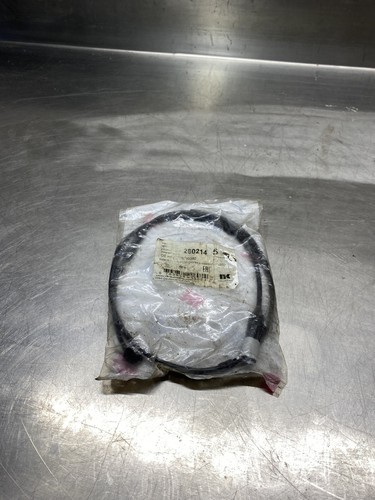
6792292
Brake pads wear sensor – 6792292
€5.91

A0535459328
Brake pads wear sensor – A0535459328
€5.95

A1645406510
Brake pads wear sensor – A1645406510
€6.00

A6394405706
Brake pads wear sensor – A6394405706
€6.50

A2205400108
Brake pads wear sensor – A2205400108
€6.50

A0575451928
Brake pads wear sensor – A0575451928
€7.00

6870350
Brake pads wear sensor – 6870350
€9.00

6870351
Brake pads wear sensor – 6870351
€9.00

A2514401507
Brake pads wear sensor – A2514401507
€9.05

A1665400105
Brake pads wear sensor – A1665400105
€10.00

A9065400334
Brake pads wear sensor – A9065400334
€10.00

HK7210K845AA
Brake pads wear sensor – HK7210K845AA
€11.76

A6394400235
Brake pads wear sensor – A6394400235
€12.00

6870353
Brake pads wear sensor – 6870353
€19.00

A9075402705
Brake pads wear sensor – A9075402705
€55.00
When should the Brake Pad Wear Sensor be replaced?
A brake pad wear sensor warns the driver that the brake pads are close to worn out, by putting a message on the dashboard before metal ever meets metal. It sits in the pad itself, and it protects the discs as much as the pads, because pads changed on the warning never get far enough to score them.A brake pad wear sensor is designed to be worn through. A thin loop of wire in a plastic clip sits at the pad's minimum safe thickness, and once the disc has worn the pad down that far, it grinds through the wire as well. The change in the circuit is what turns the warning on.Most cars carry one per axle rather than four, a single sensor on one front wheel and another on one rear, with a cable running up inside the arch to a plug. Catalogues also call it a brake pad wear indicator, a brake pad sensor, or simply brake wear sensors in the plural. Every warning uses one up. A sensor that has triggered is scrap, so pads and sensor are replaced together.Replace it whenever you see:
- The pad warning on the dash: The pads are at their limit and the sensor has done its one job.
- The warning still on after new pads: An old or damaged sensor was refitted with the fresh set.
- A warning that flickers: The cable has chafed through on the suspension and is shorting on and off.
- Low pads with no warning at all: The sensor was unplugged or bypassed by a previous owner.
- Rubbed insulation or a snapped clip: Visible with the wheel off, and reason enough on its own.
- A service message that won't clear: Some cars tie their pad-life countdown to this circuit.
How to choose the right Brake Pad Wear Sensor for your car?
Even a simple wire loop comes in dozens of versions.Cable length and connector type decide most of it. The cable has to reach its plug in the arch without stretching or flapping, the clip has to match the slot in your pads, and front, rear, left, and right sensors on one car can all be different parts.Check which corner your car actually monitors, because the new sensor goes where the old one lived. Match the braking system too, since different makers' calipers take different clips, some trim levels have no wear sensing at all, and a few models run two-stage sensors that give an early warning and a final one, which need replacing like for like.Send your car through the filters along the left, and nothing but sensors made for its brakes stays on screen. Choose an offer and you read it on its home marketplace, checkout and all.
- Vehicle make, model, and year: Sensor lengths and clips move around whenever the brakes are updated.
- OEM part number: One code confirms length, clip, and plug in a single check.
- Front or rear axle: Front and rear sensors are usually different lengths and shapes.
- Left or right side: Many cars sense one side only, and some use handed sensors.
- Brake system manufacturer: ATE, TRW, Brembo, and Bosch calipers each take their own clips.
- Connector type: The plug in the arch accepts one shape of connector and no other.
- Cable length: Too short strains the joint, too long flaps into the wheel.
- Brake pad compatibility: The clip must seat in the slot your pads are made with.
- Vehicle equipment level: Some trims skip electronic wear sensing altogether.
- Condition of the cable and connector: Rubbed insulation, kinks, or a cracked clip end the sale.
What to check before ordering a Brake Pad Wear Sensor online
There's one rule with this part that matters more than the rest.A used brake pad wear sensor is only worth buying unworn. The wire loop must be unbroken from plug to tip, because a triggered sensor can't be reset or repaired, and a meter across its two pins should read close to zero ohms rather than open.With that settled, read for the rest:
- Photos: The tip of the loop, the clip, the full cable, and the plug.
- Seller reputation: Recent buyers confirming that parts arrived as pictured.
- Compatibility: OEM code, axle, and side, with the cable length stated.
- Included components: The retaining clips and grommets there, or the bare lead?
- Condition: No rub marks, no kinks, no cracks in the plastic tip.
- Testing: A resistance reading through the loop, quoted in the listing.
- Warranty and returns: Small money, but a return option beats a second postage bill.
- Shipping: Coiled loosely in a bag rather than folded sharp at the tip.
- Documentation: How much pad was left on the donor car, since the sensor wears with them.
How much does a Brake Pad Wear Sensor cost?
This is an inexpensive part, and the price range stays narrow.A single used sensor from an everyday car costs about €3-€10, an original two-stage or long-cable unit €10-€25, and pairs or full sets €15-€40.On Parthunt24 the brake pad wear sensor price starts at 5.00. What shifts the brake sensor cost between listings:
- One-stage or two-stage: The versions with an early warning built in bring more.
- Cable length and routing: Long, shaped leads for big calipers cost above the plain ones.
- Sold singly or as a set: A front-and-rear pair often beats two separate purchases.
- Clips and grommets included: The small fittings decide whether fitting can start straight away.
- Model rarity: Sensors for popular cars are inexpensive, and rare ones are not.
- Confirmed unworn: A quoted resistance reading is what a used one is worth.
Faulty Brake Pad Wear Sensor? Inspect these parts for damage
A brake pad wear sensor replacement belongs inside a pad change rather than alongside one, so while the wheel is off, run through the rest of the corner on Parthunt24. On most cars the light goes out by itself once an unbroken sensor is plugged in, and some also want the service counter reset through the dash menu:
- Brake pads: The sensor lives in these, and the two are changed as one job.
- Brake discs: What grinds through the sensor's loop, and worth measuring while visible.
- Brake caliper: The sensor's cable clips along it, and a sticking one wears pads early.
- Brake caliper carrier: Rusty pad ledges here cause the uneven wear the sensor then reports.
- Brake booster: Unrelated to the sensor, but the same wheel-off day suits checking it.
- Brake pedal sensor switch: The other brake sensor drivers mix this up with, up at the pedal.
- Brake system control module: Reads the wear circuit on many cars, and holds the fault memory.
- ABS sensor: Shares the arch and the same chafe points, so inspect its cable too.
Find affordable Brake Pad Wear Sensors on Parthunt24
Shopping for this part on its own wastes more time than it should. It usually means a second search on a second site for a three-euro wire, another delivery charge, another wait, and sometimes a wheel that has to come off twice. On Parthunt24 the sensor lives in the same search as the pads. Set your car once and the brake pad wear sensor price of every match appears beneath the pads you were already comparing, from the same open market of breakers.Small parts get the same price comparison as big ones here, without a separate search.Check the loop is listed as unworn, add the one that fits, and check out with the sensor beside its pads, all in one order.