
Filters
Heater hose

857315602
Heater hose – 857315602
€5.00

P1476005
Heater hose – P1476005
€5.18

8E1819350T
Heater hose – 8E1819350T
€7.00

32377629
Heater hose – 32377629
€8.00

A2058300902
Heater hose – A2058300902
€8.99

4M0122050A
Heater hose – 4M0122050A
€11.11

A2138308500
Heater hose – A2138308500
€17.44

6466SS
Heater hose – 6466SS
€18.00

7H1819885C
Heater hose – 7H1819885C
€18.86

8200189697
Heater hose – 8200189697
€24.00
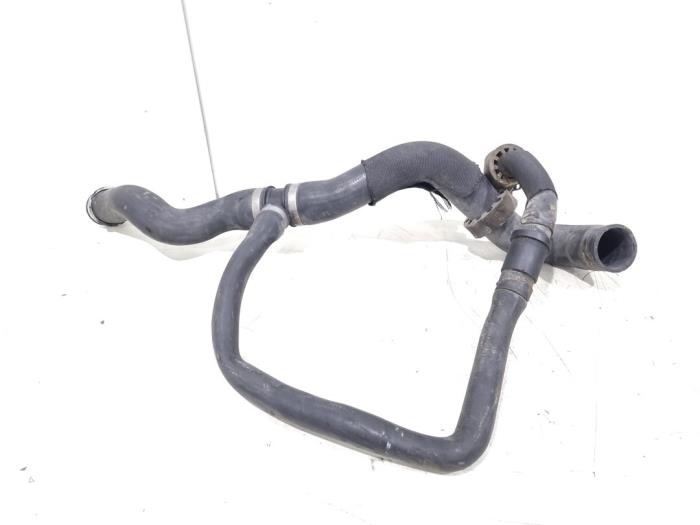
A1645002675
Heater hose – A1645002675
€30.00
When should the Heater Hose be replaced?
A heater hose carries hot coolant from the engine to the small radiator behind the dashboard, the heater matrix, and a second hose carries it back. The cabin's warmth is a by-product of engine cooling, and these two rubber hoses through the bulkhead are the whole supply line.They run from the engine to two metal stubs on the bulkhead, thinner than the radiator hoses and hot to the touch within minutes of starting. Listings write it as a car heater hose, an auto heater hose on export sites, or a heater core hose after the matrix it feeds.Two things end them. The rubber rots from the inside, because coolant and the metal stubs set up a weak electric current that eats the inner wall, so a hose can look fine outside and squeeze like sponge at its ends; mechanics call it electrochemical degradation. And on newer cars the plastic quick-connector moulded onto the hose turns brittle at the bulkhead and snaps. Replace the hose when you find:
- Coolant dripping at a hose end: the clamp has bitten through the rubber or the stub has corroded under it.
- A hose that feels spongy when squeezed: the inner wall has rotted while the outer skin still looks sound.
- A bulge or swelling near a clamp: the inner layers have let go and only the outer skin is holding the pressure.
- White crust on a connector: dried coolant, the mark a slow leak leaves behind.
- A sweet smell after driving: escaping coolant cooking on hot engine parts.
- Cold air with the engine warm: flow to the matrix stopped by a collapsed hose, a blockage, or an airlock.
How to choose the right Heater Hose for your car?
A heater hose is bought by its ends and its bends, not by its rubber.Feed and return are different parts: different bends, sometimes different bores, and on many cars a different fitting at each end, so the first thing a listing has to say is which of the two hoses it is.Match the OEM number to your engine code, because each engine bends these hoses its own way, and cars with an auxiliary heater, a heater control valve, or rear cabin heating carry extra branches on the same circuit. Watch the ends above all: spring-clamp stubs and plastic quick-connect fittings do not mix, and the connector design changed on plenty of models halfway through production. The metre of straight rubber heater hose from an accessories shop is cheap and has its place, but it cannot replace a shaped run whose connector is moulded on, and the connector is usually the part that broke.Give the column on the left your make and model, then the list shrinks to hoses shaped for your engine. One click puts you on the marketplace that holds the listing, description, photos, and payment all theirs.
- Vehicle make, model, and year: Cooling layouts move between generations, so the year narrows it fast.
- OEM part number: The moulded number ties the hose to one engine and one layout.
- Engine type and engine code: Each engine code routes and sizes these hoses its own way.
- Hose location: The feed and the return are separate parts and do not swap.
- Hose shape and routing: A shaped hose must trace the factory path, or it rubs on what it passes.
- Inner diameter: The bore has to grip its stub tightly enough to seal under pressure.
- Hose length: Too short strains the ends, too long loops into hot metal.
- Connector type: Spring clamps and quick-connect ends call for different hoses.
- Material and temperature resistance: It carries pressurised coolant near boiling, and ordinary rubber cannot.
- Condition of the hose and connectors: Sponginess, bulges, cracked collars, or crushed clips end the sale.
Things to check before buying a Heater Hose online
On the seller's page, remember that this rubber hides its worst damage on the inside.A shaped heater hose is only as good as its two ends, so the photographs that matter show the connectors and the last few centimetres of rubber before them, where the clamps bite and the rot begins.Judge the advert on:
- Photos: each end straight on, the collars of any quick-connectors, and the full run.
- Seller reputation: years of parts sold, and recent buyers who got what was pictured.
- Compatibility: OEM number and engine code against yours, plus which of the two hoses it is.
- Included components: clamps, O-rings, and retaining clips present, or rubber alone?
- Condition: spongy ends, bulges, cracks that open when it bends, chalky white marks.
- Testing: word that it came off a running car and held its coolant when it did.
- Warranty and returns: worth confirming, since an inner split shows only under heat and pressure.
- Shipping: light, but a crushed quick-connector is a dead hose, so it wants a box.
- Documentation: the donor engine code and year, because rubber counts years, not miles.
How much does a Heater Hose usually cost?
The heater hose price runs from pocket change to real money, and the ends decide which.A plain length of rubber heater hose costs a few euros a metre new, a used shaped hose with its quick-connectors runs about €10-€35, and long or branched runs with valves or auxiliary-heater fittings €35-€90.Heater hose prices on Parthunt24 start at 5.00. What lifts one heater hose price over another:
- Connectors moulded on: the brittle part everyone actually needs comes attached to the hose.
- Shape and branches: a plain curve is cheap, a branched run with a T-piece is not.
- Built-in extras: a valve, a bleed screw, or a sensor boss on the hose raises it.
- Engine rarity: hoses for everyday engines cost little because breakers have piles of them.
- Completeness: clips and O-rings in the bag mean the job starts on arrival.
- Age of the donor: the fewer winters on the rubber, the more it is worth.
Upgrading your heating system? Don't forget these essential components
Cold air from the vents is not always the hose, because everything in the heating chain ages through the same winters. While you price the hose, look over the rest of that chain on Parthunt24:
- Heater radiator: the small matrix behind the dash that these hoses feed and drain.
- Heater control valve: the tap in the circuit that decides how much hot coolant gets through.
- Interior heater climate box assembly: everything behind the dash in one box: the matrix, the flaps, and the blower.
- Electric cabin heater: the element that warms the cabin while the coolant is still cold.
- Heater blower motor resistor: sets the fan speeds, and its usual failure leaves only the top speed working.
- Cabin air duct: carries the warmed air to the vents, and a fallen duct blows heat at nothing.
- Cabin air filter: a blocked one chokes the airflow, so the warm air never gets through.
- Water pump: the push behind the coolant in these hoses, and weak flow means a lukewarm cabin.
Best Heater Hose offers on Parthunt24
The old hose is in your hand, connector snapped, and somewhere in Europe a breaker has its twin on a shelf. The usual route between those two facts is slow: ringing parts desks to describe bends over the phone, sending photos, waiting on quotes that half the time never come back. Parthunt24 replaces the describing with one search, and used heater hose offers from the whole market line up with the heater hose price and routing of each in view.Nothing here is Parthunt24's to sell; the shelf, the advert, and the till all belong to the breaker you choose.So choose well. Compare heater hose prices, match the ends against your snapped one, and have the right hose in the post today instead of another quote in the queue.