
Filters
Fuel pressure regulator

Fuel pressure regulator – 30777576
€5.00

Fuel pressure regulator – 31216313
€6.49

Fuel pressure regulator – 55202754
€6.59

Fuel pressure regulator – 5Q0201559A
€7.00

Fuel pressure regulator – 55207253
€7.35

Fuel pressure regulator – 037133035C
€7.50

Fuel pressure regulator – 90411542
€7.92

Fuel pressure regulator – 5QF201549A
€8.00

Fuel pressure regulator – 30750409
€8.00

Fuel pressure regulator – 73369A
€8.71

Fuel pressure regulator – 795300
€9.00

Fuel pressure regulator – 3145027XXX
€9.68

Fuel pressure regulator – 7805733
€10.00

Fuel pressure regulator – 195300
€10.00

Fuel pressure regulator – 31216662
€10.00

Fuel pressure regulator – 7188553
€10.49

Fuel pressure regulator – 28233373
€12.94
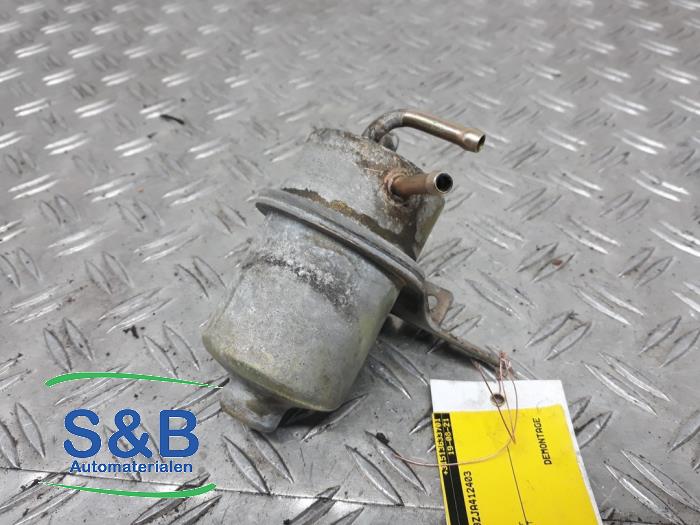
Fuel pressure regulator – 026127177B
€15.00

Fuel pressure regulator – 928400651
€15.00
Fuel pressure regulator – 281002481
€15.63
What does a fuel pressure regulator do?
What are the symptoms of a faulty fuel pressure regulator?
- Misfires and rough idle: Wrong rail pressure unbalances the mixture across cylinders.
- Black smoke from the exhaust: Over-pressure pushes the engine rich.
- Hard starting: Low residual pressure means long cranking, especially when warm.
- Fuel in the vacuum hose: A ruptured diaphragm's signature; pull the hose and check.
- Poor fuel economy: Rich running burns through a tank noticeably faster.
- Fuel smell or visible leaks: Around the rail, regulator body, or its ports.
- Power loss under load: Pressure that can't keep up with demand flattens acceleration.
How to pick the right fuel pressure regulator for your car?
- Vehicle compatibility: Match the make, model, year, engine code, and OEM part number.
- Petrol vs diesel compatibility: Fuel pressure systems differ significantly.
- Fuel pressure rating: Verify the required operating pressure.
- Fuel rail compatibility: Regulators are often specific to certain fuel rails.
- Vacuum-controlled vs electronic regulation: Different fuel systems use different regulator designs.
- Connector and hose fittings: Check the fuel line and vacuum connection types.
- Return vs returnless fuel system: Verify compatibility with the vehicle’s fuel delivery setup.
- Mounting type: Check whether it is rail-mounted, inline, or integrated into the fuel pump module.
- Turbocharged engine compatibility: Turbo engines may require different pressure characteristics.
- OEM vs aftermarket specification: Incorrect pressure regulation can affect fuelling and performance.
- Condition: Inspect for leaks, corrosion, damaged diaphragms, or contaminated ports.
What to check before buying a fuel pressure regulator
- Photos: Shots of the body, ports, vacuum nipple, and any O-rings.
- Seller reputation: Marketplace standing, ratings, and past buyer remarks.
- Compatibility: OEM number and pressure rating verified for your engine.
- Included components: Regulator alone, or with O-rings, clips, and fittings?
- Condition: Fuel staining, corrosion at the ports, perished seals.
- Testing: Confirmation it held correct pressure before removal.
- Warranty and returns: A stated route back if the regulator turns out to leak or read wrong.
- Shipping: Capped ports and snug packing to keep contamination out.
- Documentation: Where the part came from and who removed it.
How much does a fuel pressure regulator cost?
- System: Vacuum petrol units stay cheapest; diesel high-pressure regulators top the range.
- Control type: Electronic regulators cost more than mechanical diaphragm designs.
- Brand: OEM and Bosch fuel pressure regulator units hold the strongest value.
- Engine rarity: Regulators for common engines stay cheap; rare codes climb.
- Inclusions: Fresh O-rings, clips, and fittings nudge the price up.
Fuel pressure regulator failed? Inspect these surrounding parts too
- Pressure sensor: Misreporting sensors get regulators replaced for nothing; test it first.
- Fuel injector: Wrong rail pressure fouls or starves injectors over time.
- Fuel distributor: Older injection systems wear here alongside the regulator.
- Fuel injector supply pipe: Hairline cracks leak under pressure once disturbed.
- High pressure fuel injection pump: The regulator's failure can be this pump's symptom.
- Fuel filter: A clogged filter mimics a weak regulator; cheap to rule out.
- Fuel pump: Tired pumps can't build the pressure the regulator is blamed for losing.